Buying a House as a Single Person in Ontario

HOMEH Publishing Department
Author Sep 09, 2025 7 min read
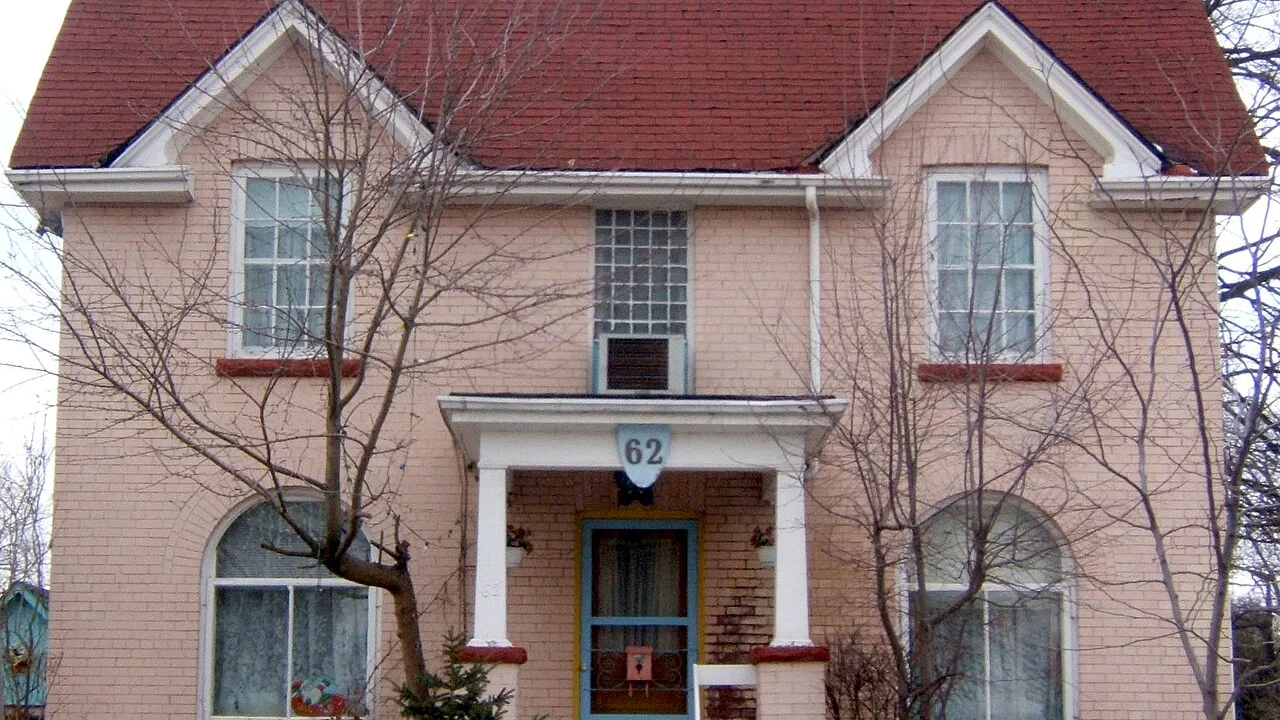
You don't need a partner to own a home. Plenty of Ontarians buy their first place on a single income — it just takes a sharper budget and a clear plan. The challenge is real: one income, one credit profile, and one person covering every cost. But with the right programs, a realistic target, and a smart use of incentives, buying solo is very achievable. Here's how to make a single income go further.
 Key takeaways
- Buying on one income works best when your housing costs stay within lender guidelines — GDS around 39% and TDS around 44%.
- A larger down payment lowers your mortgage and can remove the cost of mortgage default insurance.
- First-time buyer programs like the FHSA and the RRSP Home Buyers' Plan are especially valuable for solo buyers.
- Condos and semis are common entry points for single buyers in pricier markets.
- Eligible HOMEH buyers receive the industry's highest Cashback Rebate on their purchase.
What one income can buy
Lenders size your mortgage against your income and debts using two ratios: GDS (housing costs as a share of gross income, ideally at or below 39%) and TDS (all debts, ideally at or below 44%). On a single income, keeping other debts low is the most powerful lever you have — a paid-off car loan or cleared credit-card balance can meaningfully raise your approval amount.
The honest truth is that solo buyers often start with a condo, a semi-detached home, or a property in a more affordable city rather than a detached house in central Toronto. That's a smart strategy, not a compromise. Find your exact number with the affordability calculator, and learn how the math works in our guide on how much house you can afford.
There's also a mortgage rule every buyer must clear, and it bites a little harder when there's only one income: the stress test. Federally regulated lenders require you to qualify at the greater of your contract rate plus 2% or 5.25%, not the rate you'll actually pay. The point is to prove you could still handle payments if rates rose. For a solo buyer, the practical takeaway is to budget below your maximum approval — leaving breathing room means a single income can absorb life's surprises without putting the home at risk.
The down payment on a single income
Ontario's minimum down payment rules apply to everyone, single or not: 5% on a home priced under $500,000, then 10% on the portion between $500,000 and $1,499,999, and 20% at $1.5 million or more. A bigger down payment shrinks your mortgage and your monthly payment — and once you hit 20% down, you skip mortgage default insurance entirely.
| Purchase price | Minimum down payment |
|---|---|
| Under $500,000 | 5% |
| $500,000 – $1,499,999 | 5% on first $500k + 10% above |
| $1,500,000+ | 20% (cannot be insured) |

For solo buyers, this creates a genuine trade-off. A smaller down payment gets you into the market sooner but adds an insurance premium and a slightly larger mortgage; a bigger one lowers your monthly payment and, at 20%, removes insurance entirely. There's rarely a single right answer — the better choice depends on how fast you want to buy and how stable your income is. One recent change worth knowing: first-time buyers and buyers of new builds can now take a 30-year amortization, which lowers the monthly payment (though you pay more interest over time). That extra flexibility can make a single-income purchase more comfortable month to month.
Programs that help solo buyers most
First-time buyer programs are tailor-made for stretching a single budget. The two biggest tools for building your down payment are:
- FHSA (First Home Savings Account) — contribute up to $8,000 a year, $40,000 lifetime; contributions are tax-deductible and qualifying withdrawals are tax-free.
- RRSP Home Buyers' Plan (HBP) — withdraw up to $60,000 tax-free from your RRSP toward your home, repaid over 15 years.
- Ontario land transfer tax rebate — first-time buyers get back up to $4,000 provincially, plus up to $4,475 in Toronto.
Stacked together, these programs can shave thousands off your upfront costs — a major boost when there's only one income behind the purchase. See the full closing picture in our guide to closing costs in Ontario.
The FHSA is especially powerful for single buyers because it combines the best of two worlds: your contributions reduce your taxable income now, like an RRSP, and qualifying withdrawals come out tax-free, like a TFSA. If you're a few years from buying, opening one early and contributing steadily can build a meaningful down payment while trimming your tax bill each year. And because there's only one of you, every tax dollar saved and every rebate claimed goes further — you're not splitting the benefit, you're keeping all of it.
Your single-buyer game plan
Buying solo rewards preparation. Get pre-approved so you know your ceiling, keep your debts low, build the biggest down payment you can, and be open on home type and location. Then follow the full process in our pillar guide on how to buy a house in Ontario. If a condo is on your radar, our house vs condo guide compares the trade-offs.

Frequently asked questions
Can I buy a house on one income in Ontario?
How much down payment do I need as a single buyer?
Are there programs to help single first-time buyers?
Is it harder to qualify for a mortgage alone?
Ready to put this into action?
Get pre-qualified in five minutes, or talk to a HOMEH advisor — no credit pull, no commitment.